
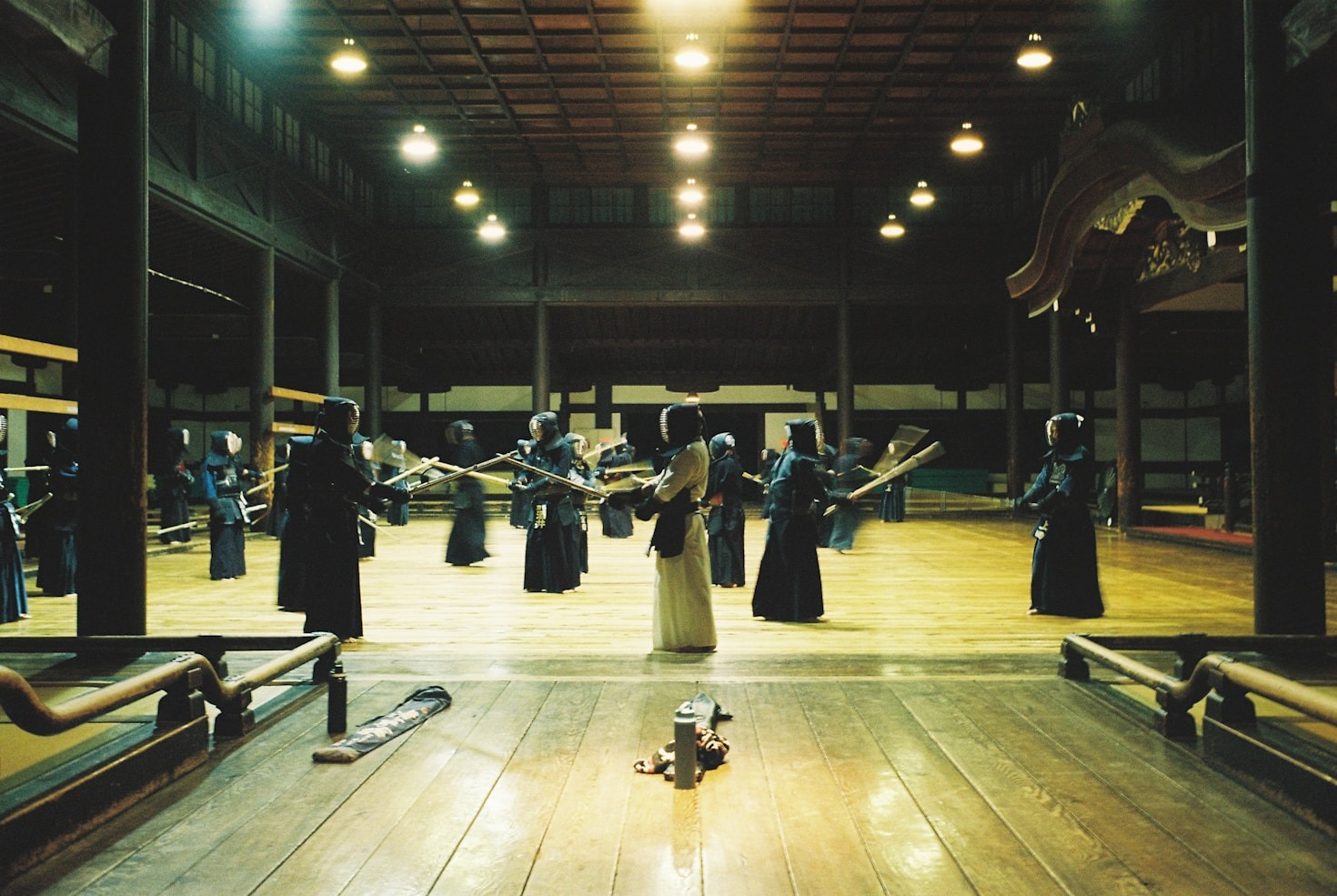
We live in a time where most people will never need to fight.
That is not a weakness of our society. It is, in many ways, one of its greatest achievements. We no longer settle disputes with blades or fists. We do not walk the streets expecting confrontation. And yet, something essential has quietly faded in the process: the daily demand to move, to engage the body, to stay physically capable.
Modern life is comfortable. Perhaps too comfortable.
Many of us spend long hours sitting. Work happens behind screens. Transportation replaces walking. Convenience replaces effort. Over time, the body adapts to stillness, and that adaptation comes at a cost. Strength declines. Mobility tightens. Energy fades. What we lose is not just physical performance, but a sense of readiness, of presence in our own bodies.
This is where martial arts enter the conversation—not as a tool for violence, but as a path back to functionality.
For those who do not enjoy repetitive workouts or the monotony of lifting weights or running on a treadmill, martial arts present a different kind of engagement. Each movement has meaning. Each drill builds toward something. There is structure, progression, and a clear sense of direction.
You are not just exercising. You are learning.
Through consistent practice, the body begins to change in ways that feel natural rather than forced. Balance improves. Coordination sharpens. Strength develops in a functional, usable way. Flexibility increases without feeling like a separate task. The body becomes more responsive, more capable, and more aware.


Through consistent practice, the body begins to change in ways that feel natural rather than forced. Balance improves. Coordination sharpens. Strength develops in a functional, usable way. Flexibility increases without feeling like a separate task. The body becomes more responsive, more capable, and more aware.
But physical development in martial arts is not isolated from mindset.
Discipline is built through repetition. Respect is practiced through tradition. Control is learned through technique. These elements are not imposed from the outside; they emerge from the process itself. Over time, the practitioner begins to carry these qualities beyond the training space—into work, family, and daily life.
There is also an important psychological aspect.
Many people struggle to stay consistent with exercise because they lack a deeper reason to return. Martial arts provide that reason. Progress is visible. Milestones are clear. Guidance from instructors creates accountability. And perhaps most importantly, training becomes a shared experience. You are not alone in your effort.
You are part of something.
It is important to be honest about what martial arts are today. They are not preparation for duels. They are not a guarantee of dominance in conflict. And they should not be romanticized as such. Their value lies elsewhere.
They offer a structured way to reconnect with the body in a world that encourages disconnection.
They provide a path for those who seek growth but need direction.
They create an environment where physical development, mental focus, and personal responsibility grow together.
In a sedentary society, choosing to train is a deliberate act. It is a decision to move, to improve, and to engage with something that demands more than passive participation.
The way of the warrior …
Martial arts do not promise perfection. They do not offer shortcuts. What they provide is a journey—one that is as much about rediscovering your physical capabilities as it is about understanding your own limits and expanding them over time.
And in that journey, the body follows.
So does the mind.
And eventually, so does the way you move through the world.
Leave a Reply